

ADDIE Basics
Design Smarter, Teach Better with ADDIE!
Discover the gold standard in instructional design—Analyze, Design, Develop, Implement, and Evaluate for effective learning solutions!
Features
What makes ADDIE so effective?
The ADDIE model is effective because it provides a structured, flexible, and iterative framework for designing, developing, and evaluating instruction systematically.

Analysis
Identify learning needs, goals, and audience characteristics.
Ensures course targets gaps and aligns with learner needs.
Implementation
Deliver the course via LMS, workshops, or blended formats.
Puts the training into action with instructor/learner support.

Design
Plan objectives, assessments, and instructional strategies.
Creates a blueprint for content and engagement methods
Evaluation
Assess effectiveness (learner feedback, performance data).
Measures success and identifies improvements for future iterations.

Development
Build course materials (videos, quizzes, activities).
Turns design into tangible, interactive learning resources.
Hear from the experts
Learn more about the ADDIE model of instructional design – Devlin Peck
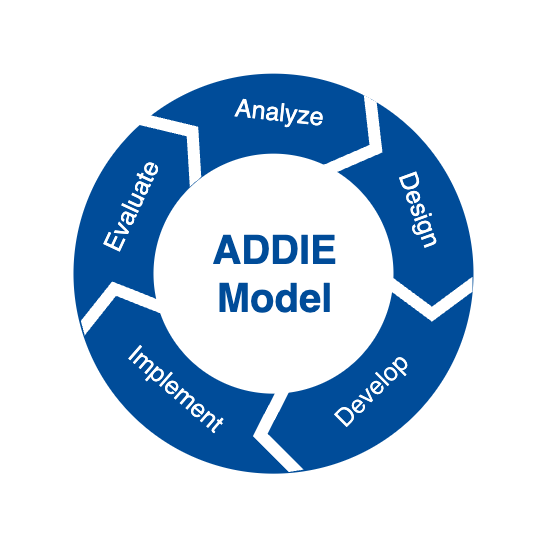
ADDIE Cycle
The ADDIE model is a cycle because the “Evaluation” phase informs and feeds back into the “Analysis” phase, leading to continuous improvement. Also, evaluation can happen throughout the other phases, causing changes to the design, development, and implementation phases.
FAQ’s
ADDIE Frequently Asked Questions
Is ADDIE still relevant today?
Yes! While newer models (like SAM or Agile) exist, ADDIE remains popular for its flexibility, structure, and adaptability to digital and traditional learning.
Can I skip stages in ADDIE?
Not recommended. Each stage builds on the last—skipping steps risks gaps in alignment, effectiveness, or learner needs.
How long does ADDIE take to implement?
It depends on project scope. A simple course might take weeks, while complex programs require months. Prototyping can speed up iterations.
How do I evaluate success in the ADDIE Model?
Use Kirkpatrick’s 4 Levels: Reaction (feedback), Learning (assessments), Behavior (performance change), and Results (business impact).
Can ADDIE work for e-learning?
Absolutely! Pair it with LMS tools, AI-driven analytics, and multimedia for modern digital training.
Does the ADDIE Model work for small-scale training projects?
Yes! While ADDIE is comprehensive, you can scale it down for smaller projects by focusing on core elements:
 Addie Model Basics